
In 2026, optimizing posting schedules for social media engagement requires early engagement signals more than ever before. Both Instagram and TikTok algorithms assess whether a new post is worthy of being pushed to broader audiences by identifying early engagement signals. This means post performance is evaluated primarily by its ability to entertain, capture attention, and stop users midway through the scroll.
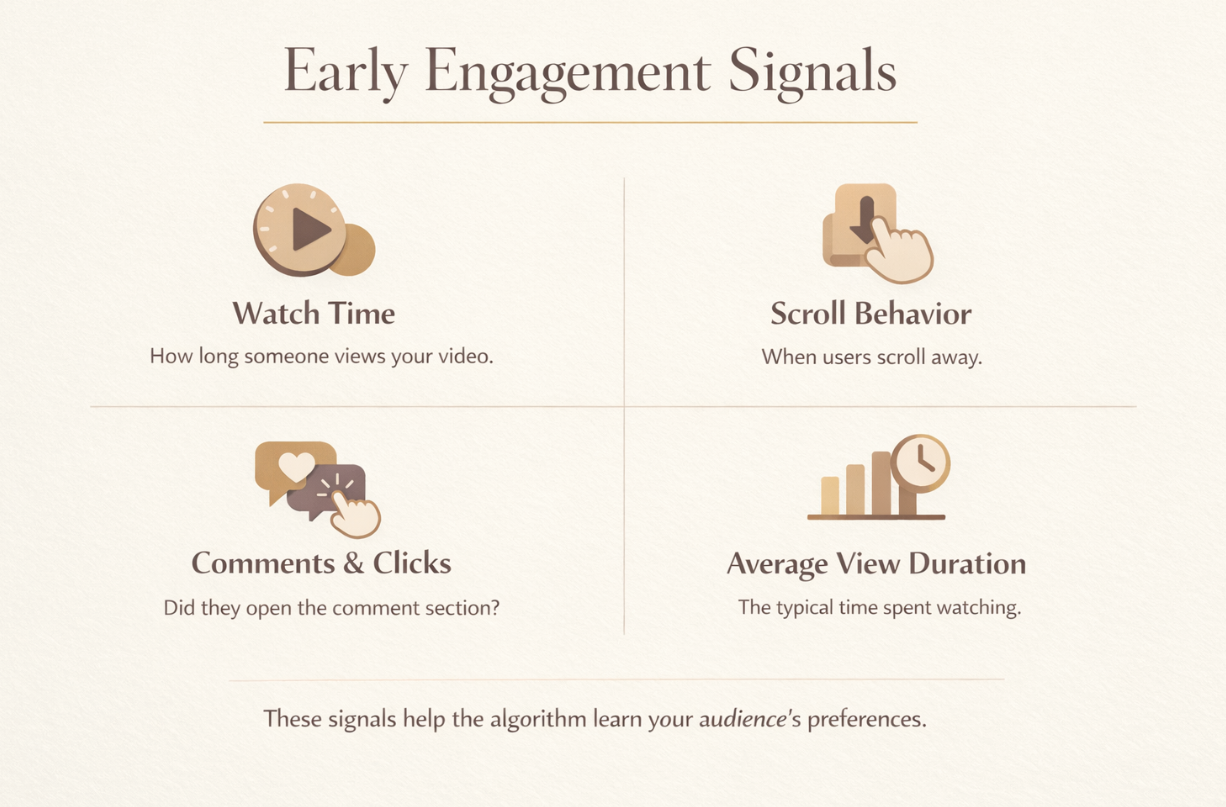
What are the early engagement signals?
The first 15 to 30 minutes after posting is typically when the algorithms look for performance: how long someone has watched your video, when people scrolled away, did they click on the comment section, what is the average view time, etc. These behavior signals teach the algorithm similar audiences to share your content to.
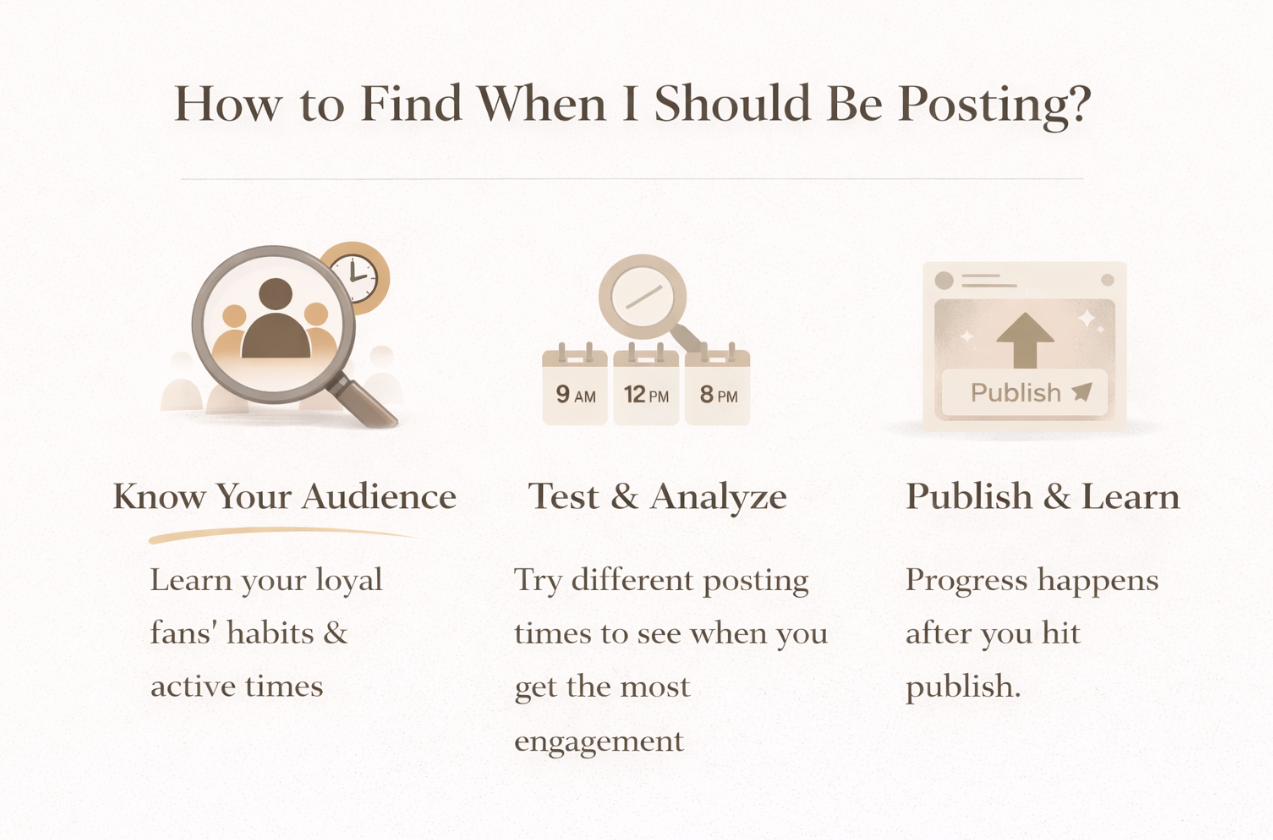
How to find when I should be posting?
Figuring out when your biggest fans - people who are likely to like and engage with your post will be the best time to post. Testing different scheduling times, or understanding who your loyal fans are and understanding their average schedule is your best bet.
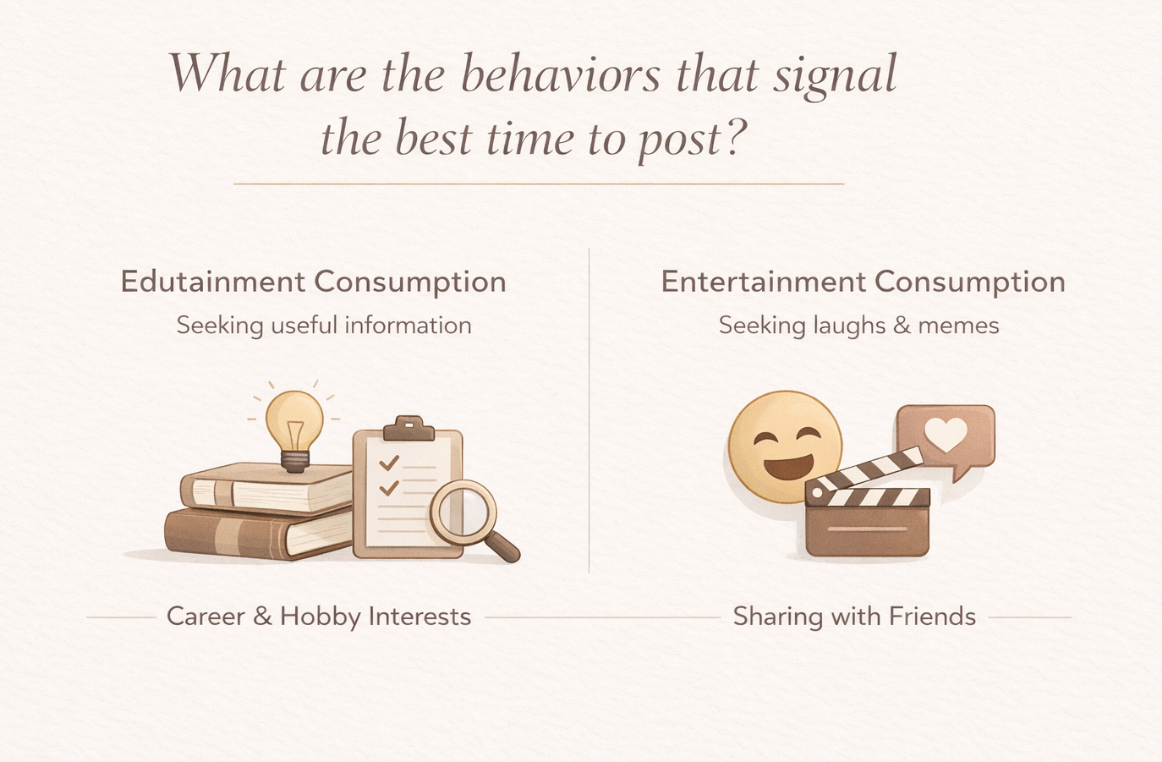
What are the behaviors that signal the best time to post?
At Social Habit, we’ve found there are two behavior types that lead to post engagements - edutainment consumption and entertainment consumption of content. Edutainment content consumption is when users are looking for useful content that may be relevant to their careers, hobbies, and niches they’re interested in. Entertainment content consumption is when users are looking for laughs and funny memes that they can share with their friends.
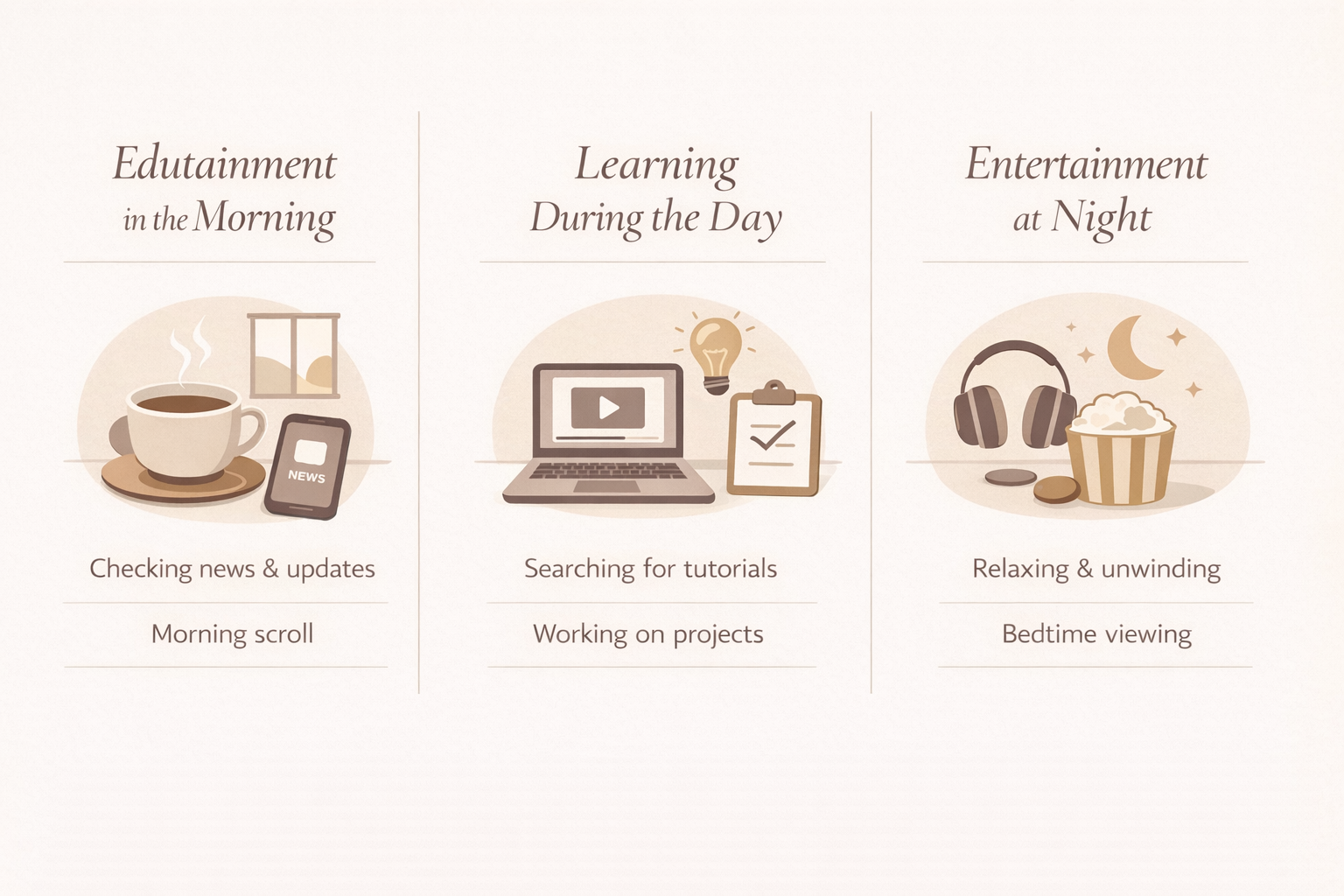
When do people focus on edutainment vs. entertainment?
Edutainment is often in the morning - users are scrolling once they’re awake to look at news and updates. Some edutainment happens during work hours - when users are searching for a tutorial, figuring out what they need for a project. Entertainment happens typically at night before users go to sleep.
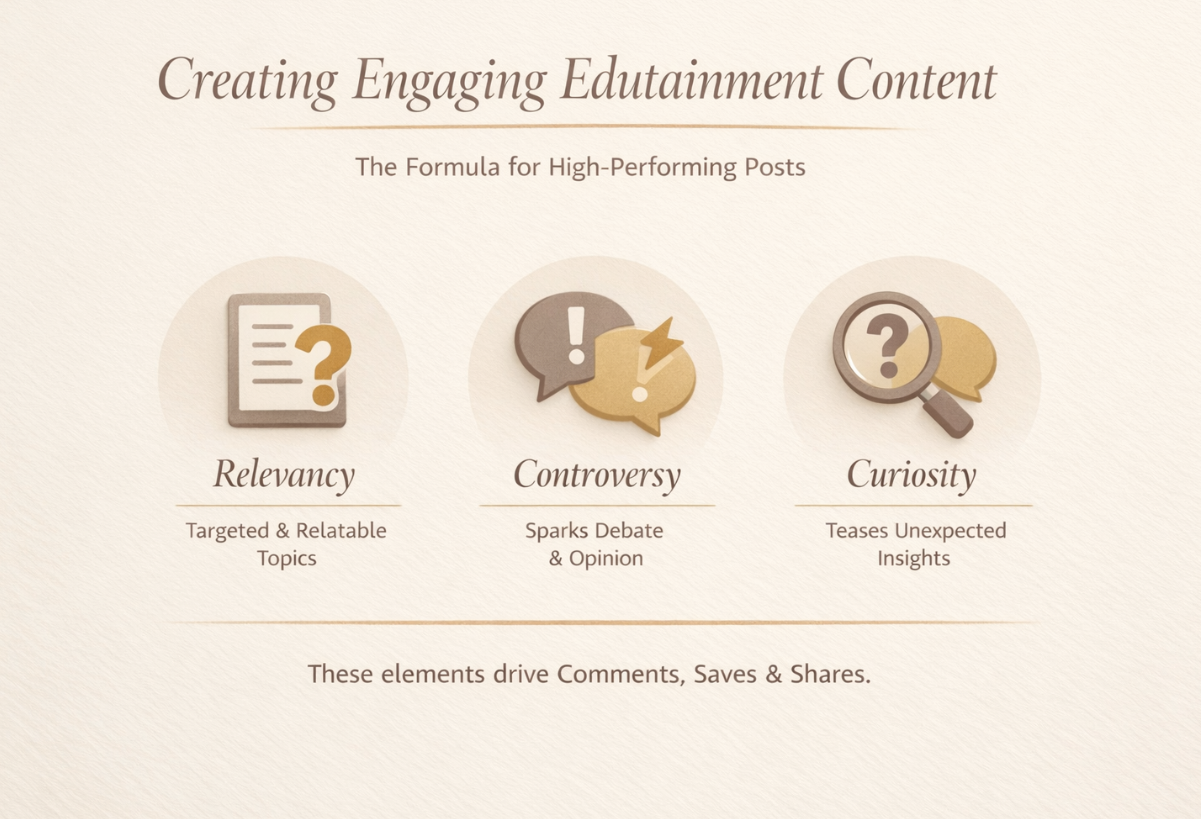
How to make edutainment content that will perform well despite content posting time?
Content that prompts users to interact requires relevancy, controversy, and curiosity. The combination of these elements drive engagement in the comments, saves, and reposts.
Topic examples:
- Most {people in your industry} don’t know this, xxxx is ____.
- I spent 30 days doing xxxx, this is what I learned ____.
- Here’s why I do / don’t recommend doing / using xxxx.
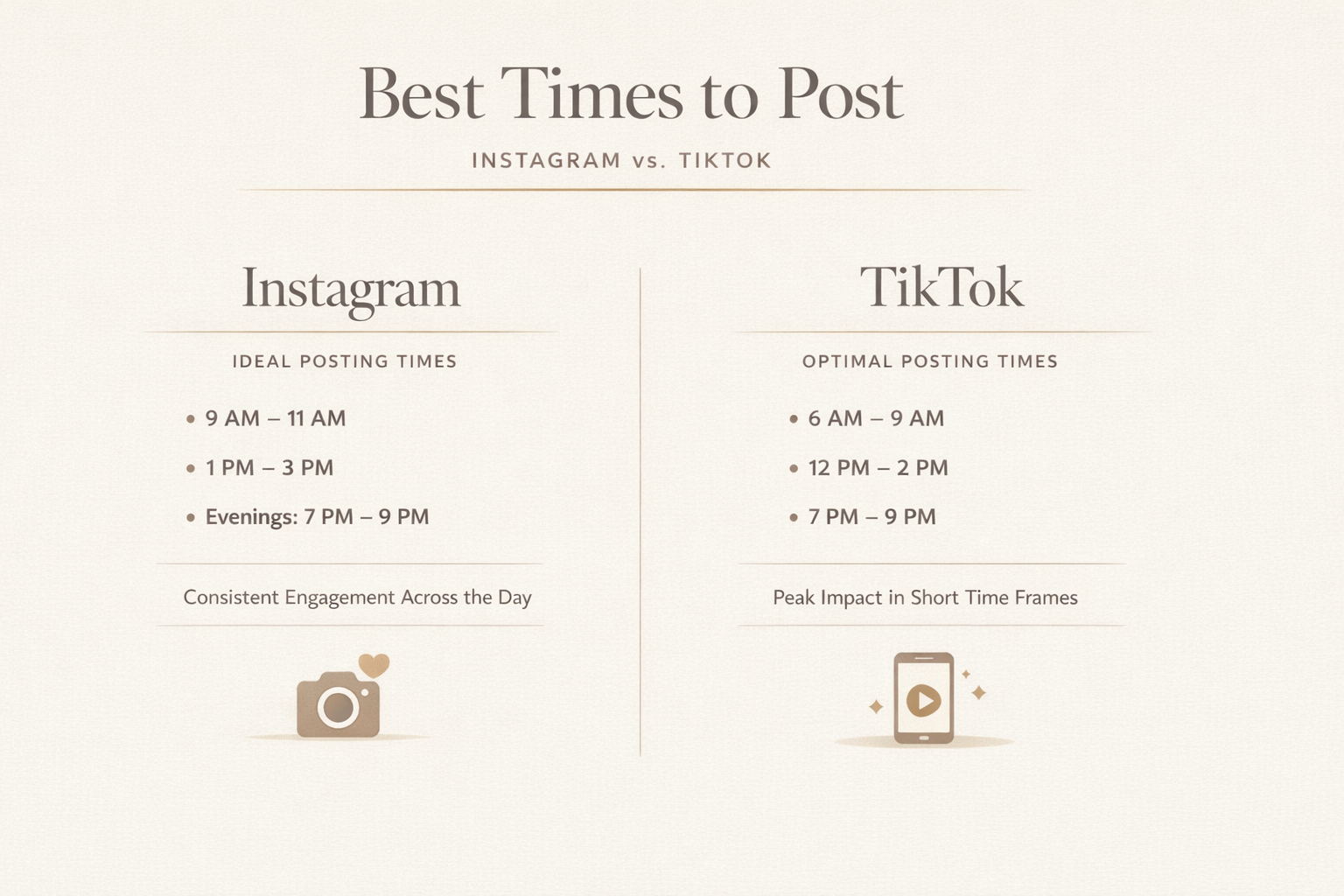
What is the best time to post on Instagram vs. TikTok?
Both platforms share similar early signal algorithmic influences, but the devil is in the detail - TikTok is much more competitive for attention because the platform is geared towards scroll experience, while Instagram has various modes of placements. This leads to TikTok being more sensitive to behavioral interaction with your posts and tighter schedule windows.
Instagram’s optimum posting window is more tricky to pin down because the experience of the content can vary depending on the different placements - explore page vs. feed vs. story.
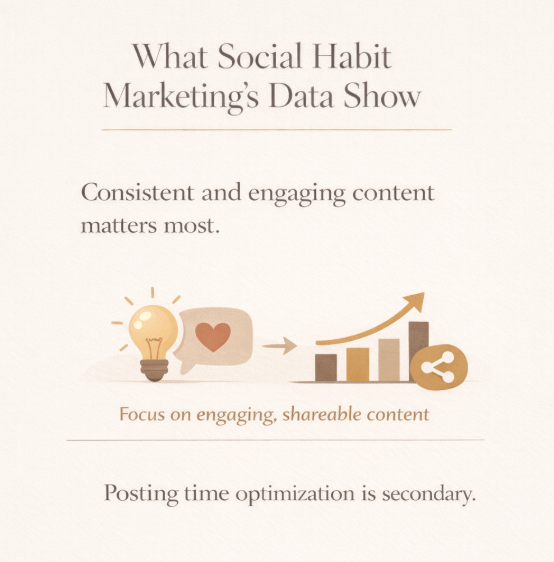
What Social Habit Marketing’s data show
While optimizing content posting time of day is a key variable in the overall social media strategy, crafting quality content frequently over a long period of time typically yields the best outcomes. Coming up with content ideas that are specifically focused on engagements and shares will outperform content that is rushed. Ultimately, content posting time optimization is one of the last components in our social media strategies.
Key Take Aways
- Quality content wins
- Engagement focused content outperforms volume
- Posting times should align with behavior cycles
- Posts that generate strong engagement within the first 30 minutes are significantly more likely to be distributed to secondary audiences.
Why scheduling time has become a lower priority
As algorithms change, different KPIs determine content reach and performance. The foremost best use of your team’s time and effort is crafting content that is designed to generate high engagement - content planned strategically will perform well despite posting schedule times.