
Social media competitor analysis is a core requirement for brands that want to build successful social media strategies in 2026. A successful social media competitor analysis helps your brand uncover what is working in your industry, where your competitors fall short, and how your organization can stand out. The first mover advantage of social media competitor analysis brings about one of the highest ROIs in digital marketing currently and Social Habit Marketing believes this trend will continue into the foreseeable future.
Conducting the analysis should be one of the first tasks to be conducted when starting a social media campaign. This precedes all other strategic decision making because the analysis provides marketers and stakeholders with market and industry context that justify the “why” of the social media campaign and hedges the marketing bets on pivotal decisions such as which platforms to use, what kind of content to create, and the type of engagement and KPIs to track.
Below, we explain the framework Social Habit Marketing uses to conduct social media competitor analysis for many of our clients and how you can take advantage of our systems and processes for your business or brand. We’ll share actionable steps that incorporate both paid and free resources so marketers of all budget ranges can take meaningful action.
What Is A Social Media Competitor Analysis Framework?
Social media competitor analysis is the process of evaluating how competing brands perform across social platforms. The social media competitor Analysis Framework (SMCAF) is a systematized method of conducting the initial analysis. This standardized system works despite each organization’s unique business and industry variabilities because the benefits of speed and business patterns outweigh unproven / unoptimized custom processes.
There are seven core components to Social Habit’s SMCAF:
- Goal definition
- Industry specific social media contextualization
- Top 3 competitors identification
- Competitor’s content analysis
- Niche analysis
- KPI definition
- One Page Summary
Step 1: Goal Definition
Understanding what outcome your brand is attempting to achieve with its social media campaign should be clearly defined at the start.
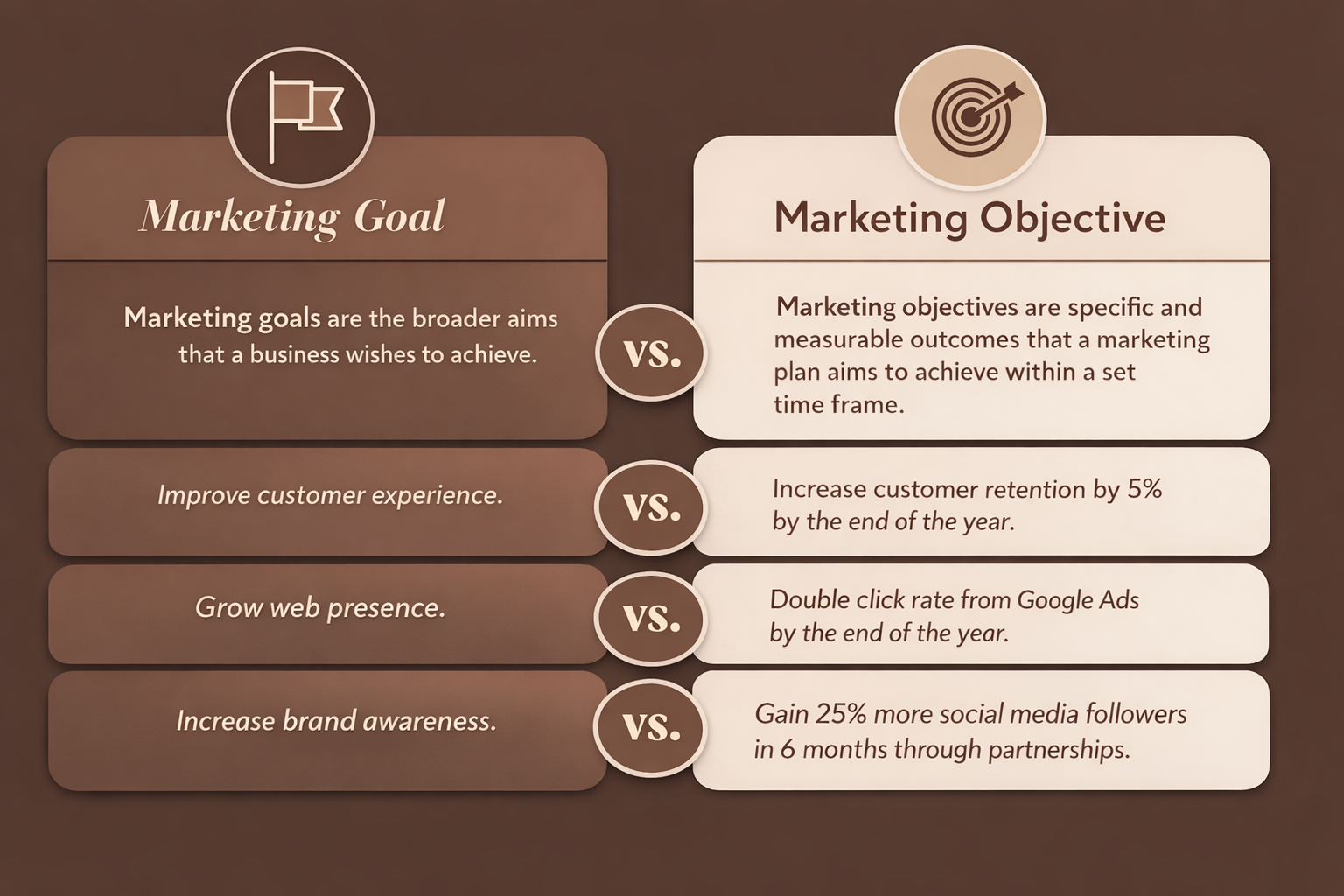
It’s tempting to define KPI goals at this moment, but what we’re really looking for is a qualitative description of the outcome. For example:
- We want local Houston residents to recognize who we are and what we do when they hear our slogan / brand name / colors.
- We need to increase our digital presence and engage with our target audience on social media.
- We need people to attend our opening event
- Differentiate ourselves from our competitors by positioning our brand as luxury.
The reason for keeping the goal as a description rather than a metric is because there are too many unknown variables to manage for specific outcomes. At this stage we want to have the correct direction but not necessarily the measurable magnitude. This will come later in step 6.
Step 2: Industry Specific Social Media Contextualization
Start broad (we’ll look into the specifics in later steps) by looking at the industry level. If you are a local business in Houston then you would want to know what the current social media marketing landscape looks like for your industry across the United States. This provides a benchmark that is helpful in understanding necessary resources and complexity in the execution of the campaign. We’re trying to answer “what will it take?” question.

Example:
If the standard in social media marketing for home builders include drone footage, interior and exterior content that shows how projects are completed from start to finish, then it can be expected that the resources needed are drone pilot and long timeline commitment (house designed, break ground, built, and furnished).
There will be a few variables or resources that are inaccessible or unavailable. This is where creative problem solving and differentiation comes into play.
The specific actionable items in this step is to create a document containing content pieces, equipment, script, and other details from top businesses that are at the forefront of your industry. It is also helpful to expand the scope of investigation to other marketing channels other than social media as multiplatform campaigns paint different pictures when it comes to multi-platform / multi-modal marketing campaigns. It may be that a billboard triggers engagement, a radio ad brings brand awareness, or an influencer on TikTok promoting the service or product.
Step 3: Identify your top 3 competitors
Knowing your immediate competitors is important because they’re likely experiencing the same limitations. Unlike the industry level competitors that are well established and funded, your top 3 competitors should be brands that are 6 months to 1 year ahead of yours in social media presence. The signals we want to look for are brand presence, follower count, engagement, not necessarily the age of a brand. A business that’s been in operation for 20 years doesn’t necessarily mean the brand signifies a healthy social media presence; they could be attracting leads through word of mouth / owner’s private network of relationships. We want competitors that are actively investing time and attention to their social media.
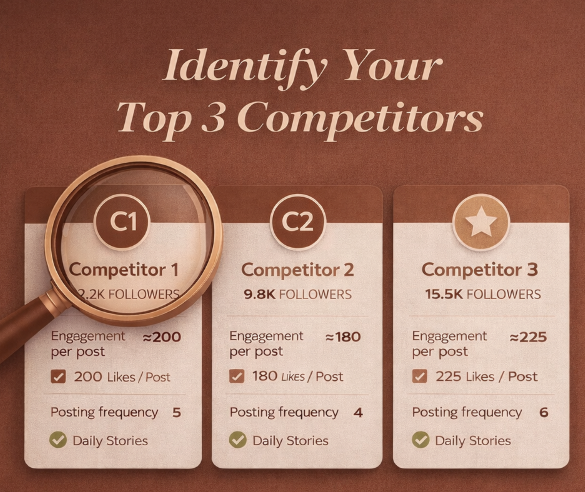
Key signals:
- Engagement / post
- Frequency of posts (Do they have a post in the last 30 days?)
- Updates on Google
- Do they have a story on a daily cadence?
- Frequency of account being tagged
Step 4: The Competitor’s Content Analysis
Now that the competitors are identified, we want to find out how their content is working. List out their most successful content (often the content that is pinned to the top) and write down what about each piece of content made it successful. This step is constructive because the analysis should answer to some of the limitations regarding resource constraints from industry level competitors analysis such as creating engaging content with less expensive professional tools. You’re looking for solutions and discover strategies and actions that are relevant at your scale of business as well as content topic strategies.
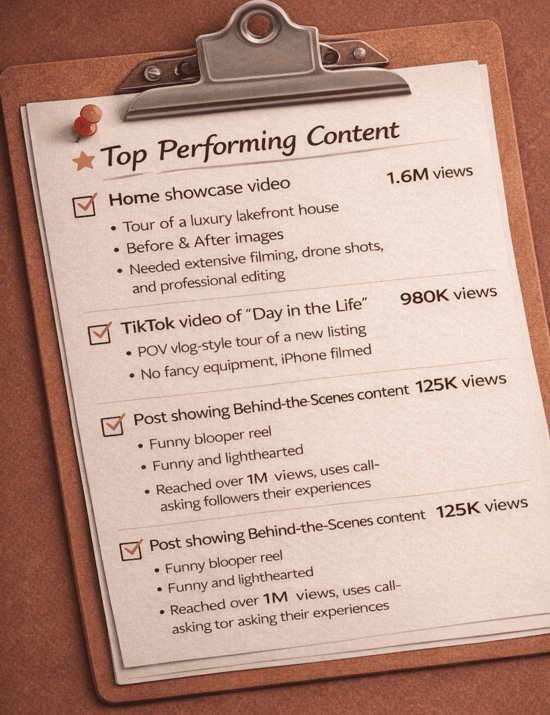
Some of the considerations:
- Equipment: iPhone content vs. Professional Photography & Videography (checkout what Social Habit brings to our shoots!)
- Content Topics: educational vs. branded vs. meme / comedic
- Frequency: How often are they being posted?
- Hook & CTAs: What are their top viewed content look like and what hooks and call to actions are they using?
- Who are they targeting mostly? (ICP)
Step 5: Niche Analysis - Be Different
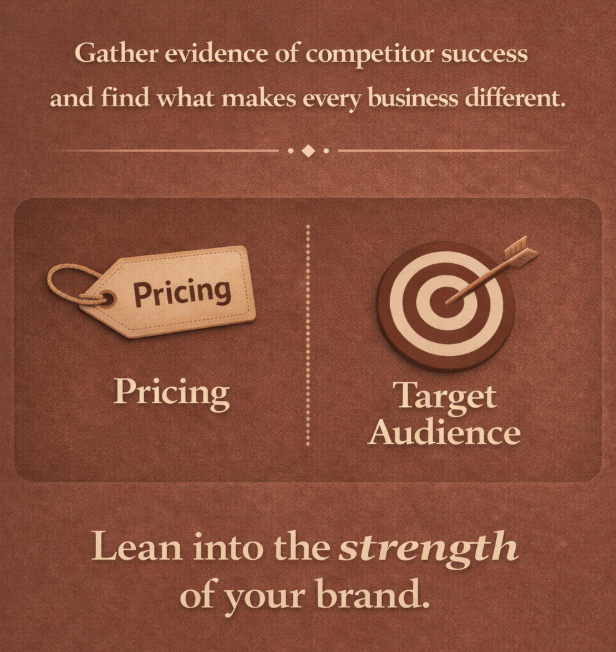
Now that we know what exists and have evidence of a proven track record of success from competitors, we can find how every business is different - from pricing to target audience. Lean into the strength of your brand.
Step 6: KPI Definition
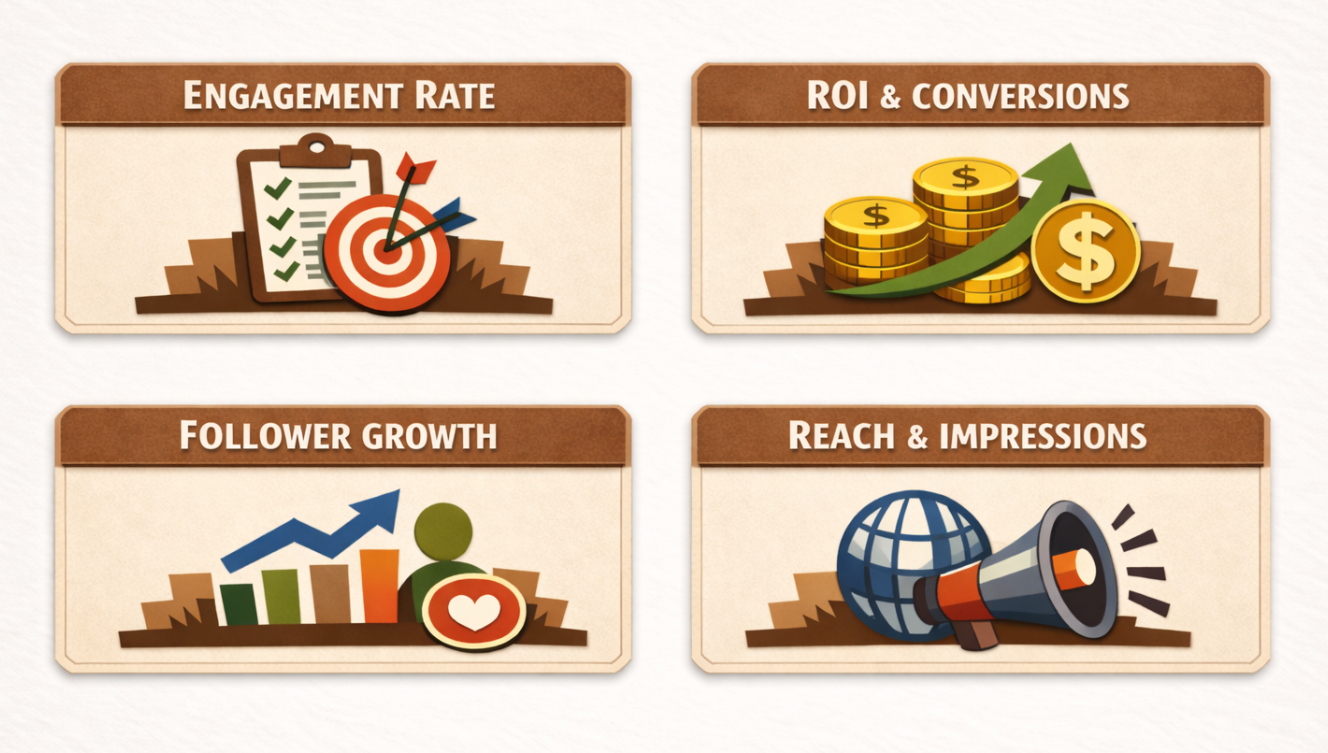
Now that our analysis contains defined desired outcomes, examples from competitors, and niche differentiation, we can define specific metrics that will serve as the measurable guard rails that ensures meeting these key performance indicators (KPIs) determines the success of the social media campaign.
Step 7: One Page Summary
Don’t overcomplicate the output. A simple one page competitor analysis summary that contains the key decisions and direction is more useful than a 10 page report. A one page summary should be easily digestible and reduce the mental load of the reader. Keep the document concise and densely informational using short sentences, bullet points, and easy to understand visuals. The key is to communicate as quickly and effectively as possible, not explain the whole strategy in detail.
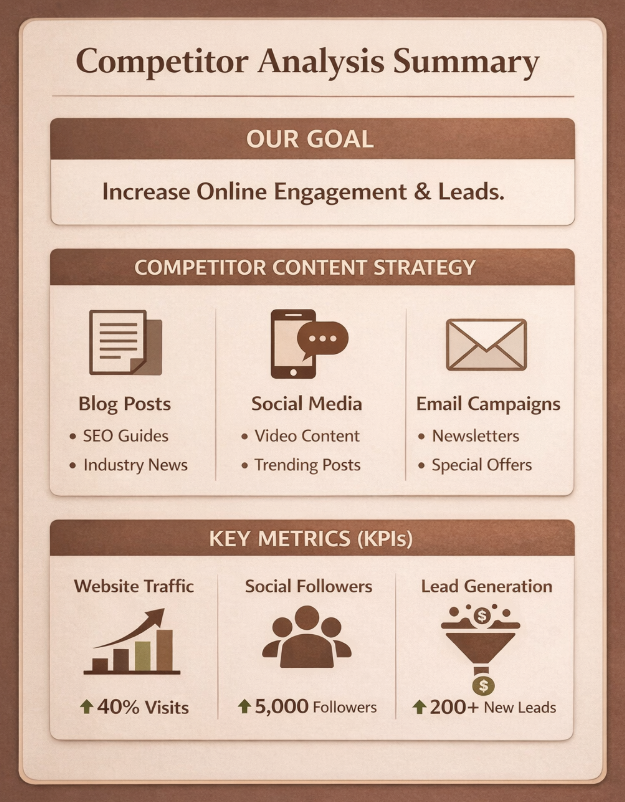
The crucial elements to include are: the goal (step 1), competitors content strategy (step 4) , KPIs (step 6). Notice how step 4 and 6 are abstractions of the previous step - this is intentional; we want to work with the output of each step in the next such that information synthesizes into useful decision making.
The next step is to craft the content strategy and use the competitor analysis to specify what kind of content and through which platform and types of content will meet the KPI.